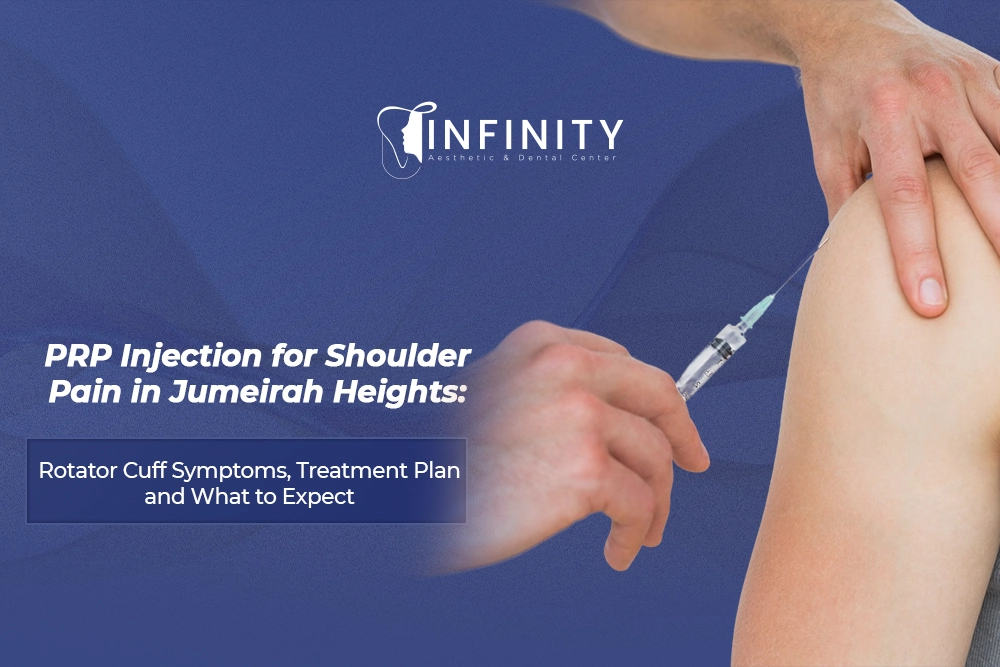
PRP injection for shoulder pain in Jumeirah Heights is increasingly discussed by patients experiencing shoulder discomfort, limited mobility, or symptoms related to rotator cuff conditions. While many people search for non-surgical treatment options, understanding who may benefit from PRP, how treatment is planned, and what recovery typically involves is essential for setting realistic expectations before making a treatment decision.
PRP Injection for Shoulder Pain in Jumeirah Heights – Common Rotator Cuff Symptoms
Shoulder pain can develop for many reasons, but rotator cuff problems are among the most common causes. Recognizing symptoms early may help patients seek appropriate evaluation.
Common symptoms may include:
- Pain when lifting the arm overhead.
- Discomfort while sleeping on the affected side.
- Reduced shoulder mobility.
- Weakness during certain movements.
Patients researching PRP for rotator cuff pain in Jumeirah Heights are often surprised to learn that symptom severity does not always reflect the extent of the underlying condition. A professional assessment is important to determine the source of the problem and appropriate treatment options.
What Does a Clinician Evaluate Before PRP?
Before recommending PRP injection for shoulder pain in Jumeirah Heights, clinicians perform a detailed assessment to understand the cause of symptoms and whether PRP may be appropriate.
The evaluation may include:
- Review of symptoms and medical history.
- Physical examination of the shoulder.
- Assessment of range of motion and strength.
- Imaging studies when clinically indicated.
Patients considering shoulder tendon PRP treatment in Jumeirah Heights should understand that accurate diagnosis plays an important role in treatment planning. The goal is not simply to address pain, but to identify the structures involved and determine whether PRP fits the overall treatment strategy.
PRP Treatment Plan – Sessions and Spacing
One of the most common questions about PRP injection for shoulder pain in Jumeirah Heights concerns the number of treatment sessions that may be recommended.(Watch this video)
Treatment planning depends on factors such as:
- The underlying diagnosis.
- Severity and duration of symptoms.
- Clinical examination findings.
- Individual response to treatment.
Unlike standardized protocols, PRP plans are often individualized. Some patients may begin with a single session, while others may require additional sessions based on clinical progress. The focus remains on selecting the most appropriate treatment schedule rather than maximizing the number of procedures.
PRP vs Cortisone – What Patients Should Know
Many patients exploring PRP injection for shoulder pain in Jumeirah Heights also compare PRP with cortisone injections.
Important differences include:
- PRP and cortisone serve different clinical purposes.
- Treatment selection depends on diagnosis and patient-specific factors.
- Response timelines may differ between treatment approaches.
- A physician determines suitability based on clinical findings.
Patients searching PRP vs cortisone for shoulder pain in Jumeirah Heights should know that treatment recommendations are made according to the condition being treated, overall health status, and treatment goals rather than a single approach being appropriate for everyone.
Recovery Timeline and Activity Guidance
Recovery is an important part of planning PRP injection for shoulder pain in Jumeirah Heights, and expectations should remain realistic during the first days and weeks after treatment.
Some patients may experience:
- Temporary soreness around the treatment area.
- Mild discomfort with certain activities.
- Activity modifications during the early recovery period.
- Gradual changes as healing progresses.
Patients researching the PRP shoulder pain recovery timeline in Jumeirah Heights should understand that recovery experiences vary significantly. Factors such as diagnosis, activity level, and individual biological response can all influence the pace of recovery and treatment progression.
Why Choose Infinity Center?
Successful PRP treatment depends on more than the injection itself. Accurate diagnosis, proper patient selection, and careful treatment planning play an important role in determining whether PRP is appropriate and how progress should be monitored over time. For patients considering PRP injection for shoulder pain in Jumeirah Heights or Jumeirah Park, these factors can be just as important as the procedure itself.
- Comprehensive evaluation before recommending PRP treatment.
- Expertise in assessing rotator cuff, tendon, and shoulder-related conditions.
- Individualized treatment plans tailored to clinical findings and patient goals.
- Ongoing follow-up to monitor recovery and treatment response.
- Evidence-based treatment recommendations guided by medical assessment.
- A patient-centered approach focused on function, mobility, and long-term shoulder health.
Book Your Consultation
- Phone: +971 58 182 7011
- Address: 1.18 Almas Tower, Jumeirah Lake Towers, Dubai, UAE.
FAQ’S
Is PRP suitable for all shoulder pain conditions?
No. Suitability depends on the diagnosis, clinical findings, and overall condition of the shoulder.
How many PRP sessions are usually needed?
The number of sessions varies depending on the condition being treated and the patient’s response to treatment.
Does PRP require surgery?
No. PRP is considered a non-surgical treatment procedure.
When can normal activities be resumed?
Activity recommendations vary according to the condition treated and the physician’s guidance.
Conclusion
PRP injection for shoulder pain Jumeirah Heights or Al-Sufouh may be considered for selected patients seeking non-surgical treatment options for shoulder-related conditions. However, successful treatment planning begins with accurate diagnosis, realistic expectations, and individualized clinical assessment. Understanding symptoms, treatment timelines, and recovery expectations can help patients make informed decisions about their care.