
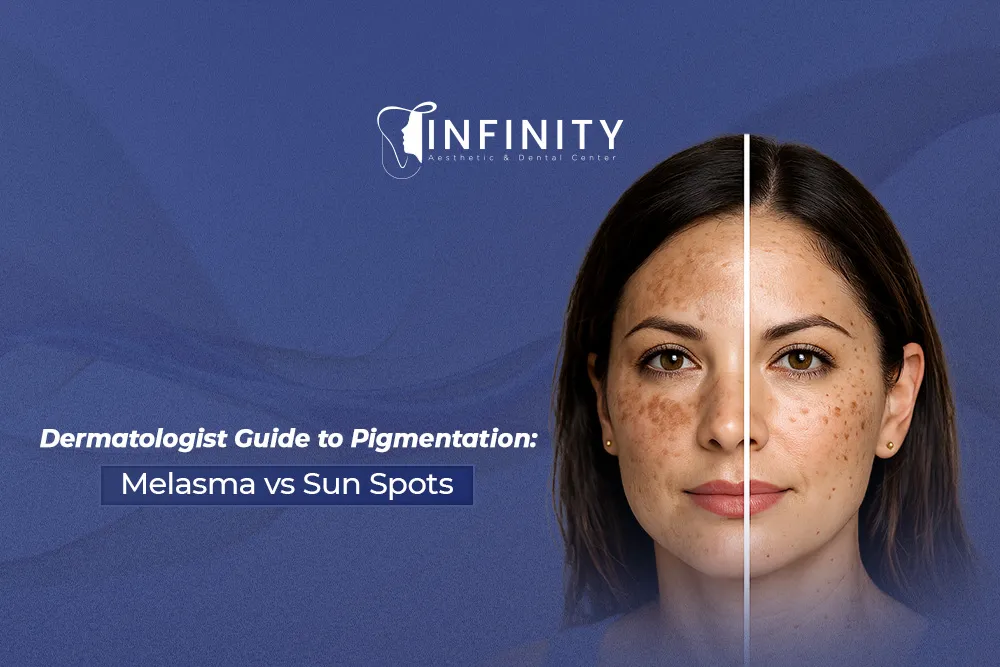
Dermatologist Guide to Pigmentation Melasma vs Sun Spots
Skin pigmentation treatment is one of the most common reasons patients visit a dermatologist, especially in sunny regions like the UAE. Changes in skin color may develop slowly or appear suddenly, often affecting confidence and skin clarity. Understanding the difference between melasma and sun spots is essential before choosing the right skin pigmentation treatment based on medical evaluation, not guesswork.
Skin Pigmentation Treatment: Understanding the Basics
Skin pigmentation treatment focuses on managing uneven skin tone caused by excess melanin production. This condition is commonly known as skin hyperpigmentation, and it can appear in different forms depending on the trigger and skin response.
Common causes include:
• Long term sun exposure
• Hormonal changes
• Genetic factors
• Inflammation or previous skin injury
Because pigmentation has different causes, skin pigmentation treatment should never follow a one size fits all approach.
What Is Melasma and How Does It Appear?
Melasma is a type of skin hyperpigmentation that usually appears as symmetrical patches on the face. It is more common in women and often linked to hormonal factors.
Typical features include:
• Brown or gray brown patches
• Appears on cheeks, forehead, or upper lip
• Can worsen with sun exposure
• Tends to recur if not managed carefully Melasma requires a gentle and well planned skin pigmentation treatment strategy, as aggressive procedures may worsen the condition.
What Are Sun Spots and Why Do They Form?
Sun spots are another form of skin hyperpigmentation caused mainly by cumulative sun exposure over time. Unlike melasma, sun spots are usually well defined and appear gradually.
Common characteristics include:
• Flat brown or dark spots
• Found on sun exposed areas
• More common with aging
• Often stable in size and colorSkin pigmentation treatment for sun spots differs from melasma, which makes correct diagnosis essential.
How Dermatologists Plan Skin Pigmentation Treatment
Effective skin pigmentation treatment starts with proper skin assessment. Dermatologists evaluate pigmentation depth, skin type, medical history, and lifestyle factors before recommending any treatment.
Treatment planning may include:
• Medical grade topical therapies
• Advanced dermatology procedures
• Sun protection guidance
• Long term skin care strategiesBecause skin hyperpigmentation behaves differently from one patient to another, improvement is usually gradual and depends on consistency and correct planning.(watch the video)
Why Choose Infinity Aesthetic & Dental Center?
Treating pigmentation requires medical judgment and careful decision making, as the wrong approach can lead to irritation or worsening discoloration. At Infinity Aesthetic & Dental Center, pigmentation is managed as a medical condition rather than a cosmetic trend, with a strong focus on diagnosis and skin safety.
What sets Infinity apart in skin pigmentation treatment:
• Clear diagnosis of the pigmentation type before starting treatment
• Treatment selection based on pigmentation depth and skin type
• Avoidance of procedures that may aggravate melasma
• Step by step treatment approach that protects skin health
• Medical decisions guided by clinical assessment, not trends
Conclusion
Melasma and sun spots may look similar, but they require different management strategies. Understanding the cause and pattern of skin hyperpigmentation allows dermatologists to choose the most appropriate skin pigmentation treatment safely and effectively.
If you are concerned about uneven skin tone or considering skin pigmentation treatment,booking a professional dermatology consultation is the right first step. A personalized skin assessment helps determine the safest and most suitable treatment plan based on your skin needs.